Does a Hair Transplant Hurt?
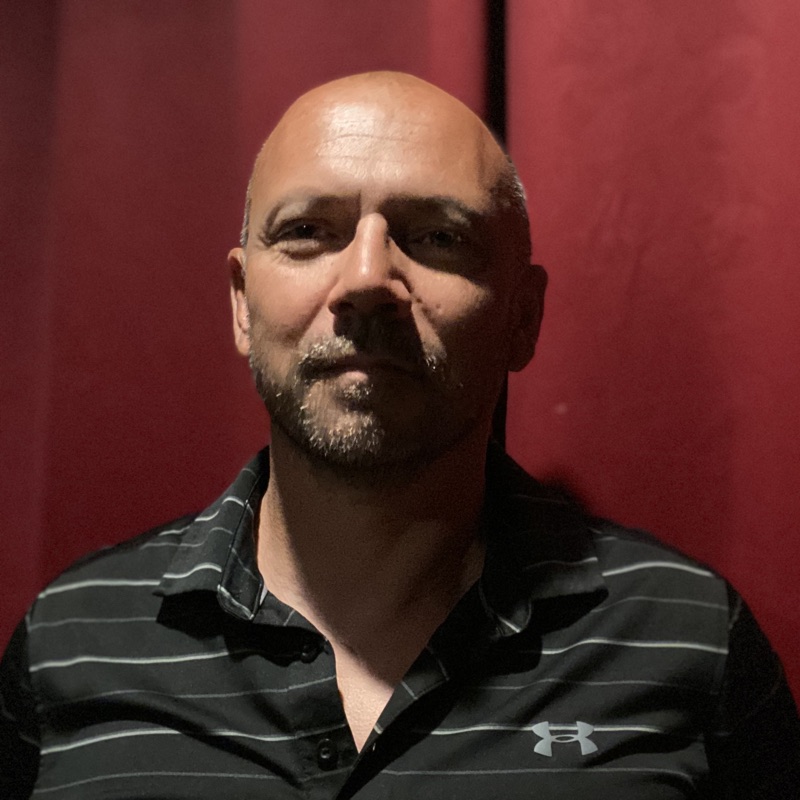 Written by Michael Seutin,
founder — former nurse, researching transplant pricing.
Published · every medical statement links to its source.
Mostly at the start. A hair transplant is usually done under local anaesthetic and sedation, so you are awake but should not feel pain during the surgery[1]. Most of the pain comes from the numbing injections themselves[2]. Afterwards, most patients report no more than mild discomfort for a day or two, followed by 7 to 10 days of tenderness to the touch[3].
The injections are the part that hurts
A 2004 review of pain control in hair transplantation puts it plainly: most of the pain associated with the procedure comes from injecting the local anaesthetic[2]. How much it hurts varies from person to person. The ISHRS says hair restoration surgery isn't painless, that pain control is much more effective than it used to be, and that people differ in how well they tolerate pain[4].
One small study gives a sense of scale. Each of 25 patients having a first transplant had a standard numbing solution injected on one side of the scalp and a buffered one on the other. On a 0 to 10 scale, injection pain averaged 4.96 (range 3 to 7) with the standard solution and 3.28 (range 2 to 6) with the buffered one[5].
So ask the clinic how it numbs the scalp. The ISHRS says patients who dread the injections can have an anaesthetic applied to the skin first[4], and a 2018 review lists ice packs and vibration devices as ways to dull the sting of the injections[6]. General anaesthesia is rarely used: the ISHRS says it is better if you can respond to the surgeon's instructions during surgery[4].
During the surgery
Once the scalp is numb, the ISHRS patient brochure says there is typically little discomfort during the procedure[7]. The numbness has to last for hours, though. The 2004 review stresses keeping the anaesthetic topped up in time as sessions get longer, with the goal of keeping the patient pain-free throughout[2], and the 2018 review names large sessions with inadequate anaesthesia among the causes of pain, along with a wide strip, bleeding and tension on the wound[6]. If you start to feel it, say so.
The first days after
The NHS says a tight, achy and swollen scalp for a few days is common after a hair transplant[1]. The ISHRS says most patients report no more than mild discomfort, lasting a day or two, then 7 to 10 days of tenderness to the touch, and that the physician prescribes medication to relieve it[3]. Its patient brochure adds that there is usually little or no discomfort where the grafts went in, while most patients feel some tightness in the donor area for 1 to 2 days[7]. Take the pain relief your surgeon prescribes, the way it is prescribed.
FUE or FUT: which hurts more?
Usually the strip. A 2021 review says pain is a common complaint after strip surgery (FUT), though FUE patients may also have pain, usually over the donor area[8]. The ISHRS says many patients report less pain after FUE than after FUT[9].
Numbness and tingling
Numbness in the donor or recipient area usually disappears within 2 to 8 months, according to the ISHRS brochure[7]. In one surgeon's record of 2,896 patients, numbness was seen in 18; the paper says it subsided on its own within 2 to 3 weeks, except in one strip patient, whose numbness lasted almost 4 months before it too recovered[8]. The same review says minor nerve symptoms such as burning or over-sensitivity settle within 6 to 8 weeks, and that persistent ones need attention[8]. Rarely, a nerve cut by a deep incision can leave lasting over-sensitivity or a tender lump called a neuroma[6].
Pain that is not normal
The NHS says to contact the clinic where you had the transplant as soon as possible if you have severe pain or any unexpected symptoms[1]. A 2021 review says swelling with pain and redness over the donor or recipient area or the face, with or without fever, should be taken seriously and needs immediate attention[8]. Our page on infection covers the signs.
If you have the surgery abroad, settle before you book who answers that call once you are home. The ISHRS lists managing possible adverse reactions among the parts of hair restoration that a licensed physician should handle[10].
Clinics that name the surgeon who operates
Of the 36 clinics we track, 33 name the surgeon who operates on their own website. We read each clinic's own site by hand and record what it says. This counts the clinics that name someone; it is not a verdict on the rest.
A few of them, lowest listed price first:
Does your quote say this in writing?
Our quote check reads a written quote for what it leaves open. These are its rows on what you are paying for, and what happens after you leave:
- Lists what the price includes. Hotel, transfer, medication and follow-up are sometimes in the number and sometimes an invoice later.
- Says what happens afterwards, and who to contact. Complications happen after the flight home, when the clinic is in another country.
8 of the 36 clinics we track publish any price on their own site. The rest quote privately, case by case, so what your own quote includes is the comparison you actually get.
Check your quote →Sources
Primary sources only: the NHS, the FCDO, the ISHRS and peer-reviewed papers on PubMed and PubMed Central. Each was opened and read on the date shown.
- Hair transplant — NHS. Read 2026-10-23.
- Techniques to reduce pain associated with hair transplantation: optimizing anesthesia and analgesia (Nusbaum, Am J Clin Dermatol, 2004) — PubMed. Read 2026-10-23.
- After Hair Restoration Surgery — ISHRS. Read 2026-10-23.
- Anesthesia: Maximizing Patient Comfort in Surgical Hair Restoration — ISHRS. Read 2026-10-23.
- Pain perception of a new Ahmad-Humayun solution for local anesthesia in hair transplantation (Mohmand et al., J Cosmet Dermatol, 2021) — PubMed. Read 2026-10-23.
- Complications in Hair Transplantation (Kerure & Patwardhan, J Cutan Aesthet Surg, 2018) — PubMed Central. Read 2026-10-23.
- Medical and Surgical Options to Restore and Maintain Scalp Hair (patient brochure, 2005) — ISHRS. Read 2026-10-23.
- Complications of Hair Transplant Procedures: Causes and Management (Garg & Garg, Indian J Plast Surg, 2021) — PubMed Central. Read 2026-10-23.
- FUE Hair Transplant: Benefits, Process & Recovery — ISHRS. Read 2026-10-23.
- Seeking Hair Restoration Surgery? Be sure a properly trained and licensed physician is responsible — ISHRS. Read 2026-10-23.
Read next
← The full hair transplant recovery timeline, day by day to month 12
Compare quotes before you commit
Tell us roughly what you need. Michael reads every enquiry personally and replies with what our data shows on price, who operates, and what to ask before you pay a deposit. We don't forward your details to any clinic — no sales calls, no lead brokering.
Get told when a clinic's price or surgeon changes
We re-check every clinic we list against its own website. When one starts publishing a price, stops naming its surgeon, or changes what it charges, you hear about it. No recommendations, no sales calls, and we don't sell or share your address. Nothing is being sent yet — this is the list for when it is.
One-click unsubscribe in every email. Privacy Policy.
Questions, answered
Mostly the numbing injections at the start. The NHS says a hair transplant is usually done under local anaesthetic and sedation, so you are awake but should not feel pain. Afterwards the ISHRS says most patients report no more than mild discomfort for a day or two, then 7 to 10 days of tenderness to the touch.
Usually, afterwards. The ISHRS says many patients report less pain after FUE than after FUT, and a 2021 review says pain is a common complaint after strip surgery, while FUE patients may feel it mostly over the donor area.
A few days for most people: the NHS says a tight, achy, swollen scalp for a few days is common. Severe pain, or swelling with pain and redness, with or without fever, is not normal. The NHS says to contact your clinic as soon as possible.